Ernst Haeckel
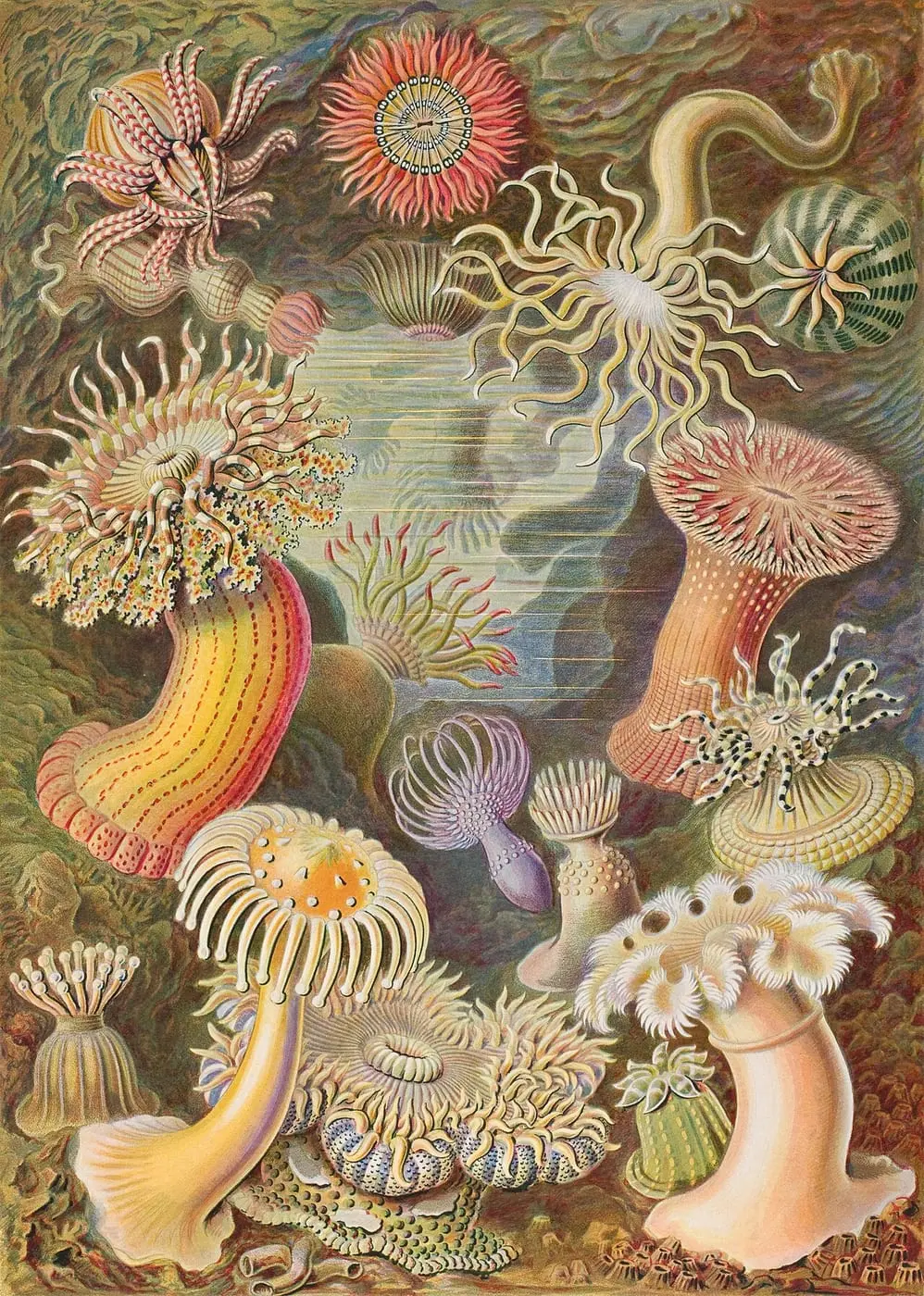
Actiniae
fromCHF 59.00
Free delivery in Switzerland from CHF 99. 14-day returns. Delivery details

Ernst Haeckel, 1904
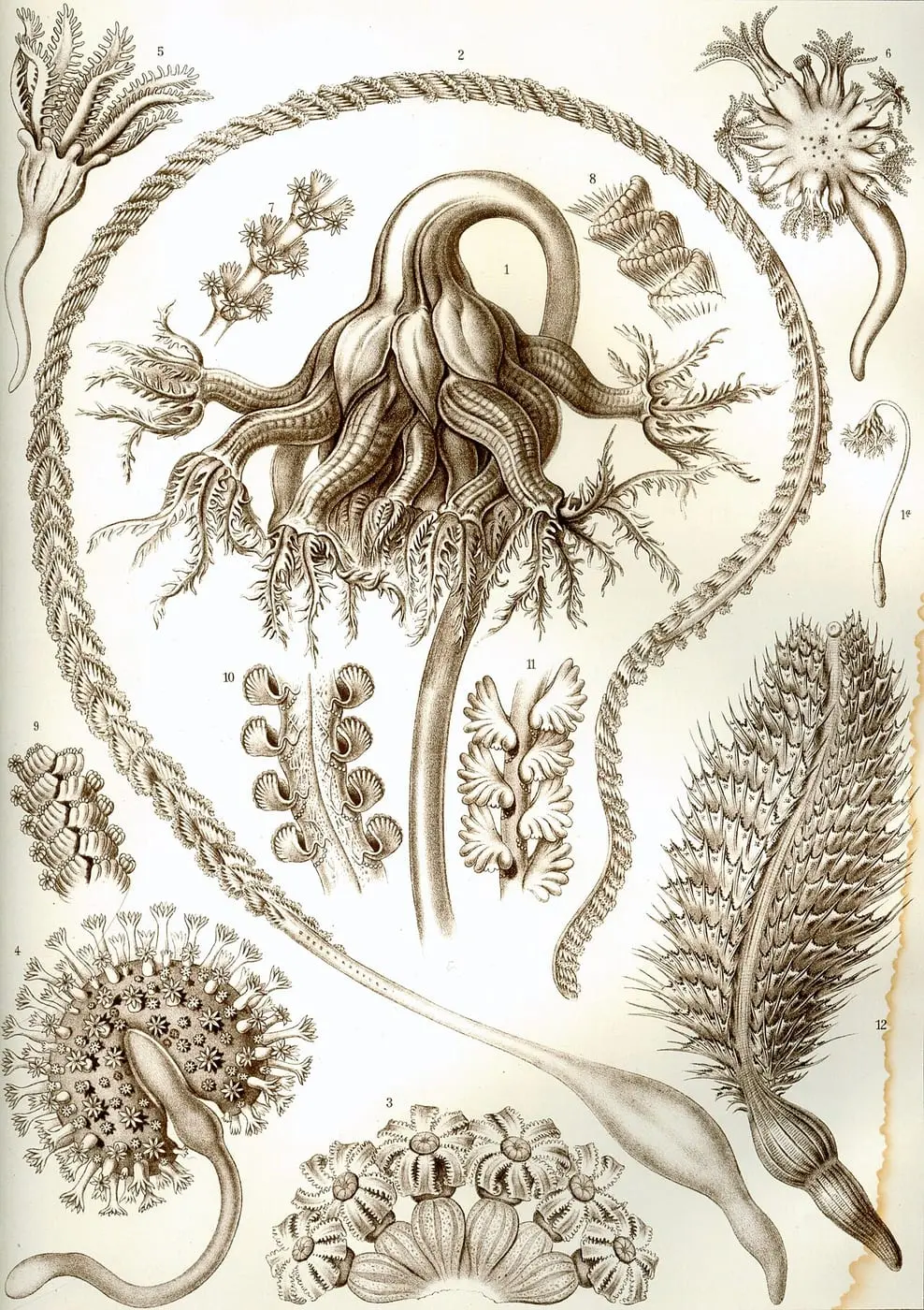
Haeckel's 1904 plate of tubularian hydroids, with polyps and tiny medusae arranged like a garden of marine blooms.
No VAT charged. Free delivery in Switzerland from CHF 99. Delivery details
Tubulariae is a 1904 plate by Ernst Haeckel, numbered plate 6 in his Kunstformen der Natur. It gathers a group of hydroids, marine animals related to jellyfish, and shows them at different stages of life. Polyps stand at the left, right and bottom of the page, some of them budding off small medusae. Across the top you can see medusae, one viewed from beneath its bell, along with a young larva and an older larva called an actinula. Each is labelled with its name in the original scientific record. The result reads a little like a botanical study, with stems, crowns and tendrils set out across the page.
On your wall: Suits studies, libraries, living rooms and bathrooms, particularly where a botanical or natural history theme is wanted.
Public domain. Image via Wikimedia Commons.
Text based on Wikimedia Commons.
Ernst Haeckel was a German zoologist, naturalist, physician and professor who also worked as an artist. He described and named thousands of new species, drew a family tree linking all living things, and coined terms such as ecology and phylum. He helped introduce Charles Darwin's ideas to Germany.
Based on Wikipedia.
Printed on canvas and stretched over a 2 cm FSC-certified wooden frame, with the image wrapping around the edges. Framed versions sit in a wooden floater frame in black, natural or dark wood.
Every canvas is printed to order by our partner in Germany: framed canvases arrive in 6–11 working days, unframed ones in 7–12 working days. Delivery is free in Switzerland on orders from CHF 99. We also deliver to the USA, Canada, Australia, New Zealand, Singapore and many more countries, printed close to you where possible. You can return an undamaged canvas within 14 days. See delivery and returns.